Picking Up Where She Left Off: The Rare Skill That Makes Emily Bergl's Character Returns Feel Effortless

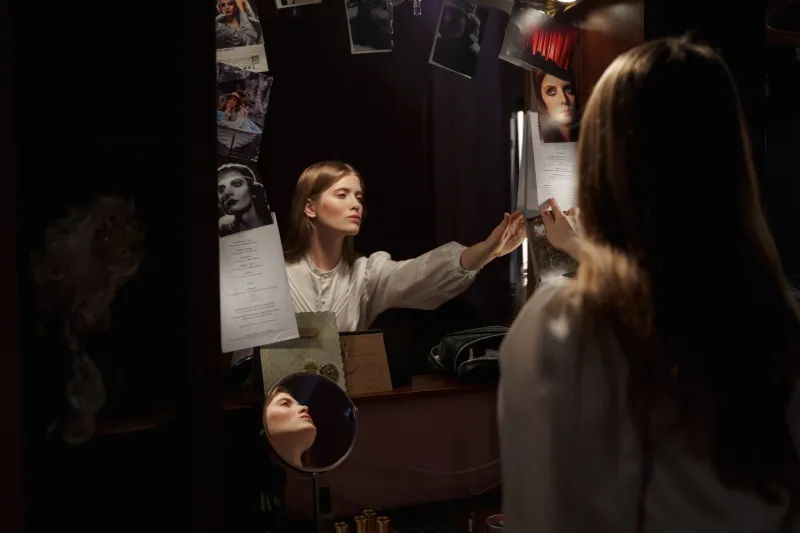
Photo by Photo by Hulki Okan Tabak on Unsplash on Unsplash
There's a particular kind of magic that happens when an actor steps back into a role they haven't played in years — and the audience just believes it. No awkward recalibration. No sense that the character has been freshly assembled from scratch. Just a seamless continuation, as if the story never actually stopped.
Emily Bergl has pulled this off more than once. And the more you look at how she does it, the more you realize it's not luck — it's a seriously undervalued craft skill that sits at the intersection of emotional intelligence, physical memory, and an almost stubborn commitment to character consistency.
The Problem With Coming Back
Here's what makes returning to a role so tricky: audiences remember. Maybe not every detail, but they carry a feeling — the texture of who that character was, how they moved through scenes, the emotional register they operated in. If an actor comes back and that feeling is off, even slightly, viewers notice. They might not be able to articulate it, but something nags at them.
The trap most actors fall into is overcorrecting. Either they lean so hard into nostalgia that the character feels frozen in amber, unchanged and a little hollow, or they swing the other way and play a version of the character that's evolved so dramatically it breaks continuity. Threading that needle — honoring who someone was while allowing them to have genuinely lived in the intervening years — is harder than it sounds.
Bergl has talked in interviews about approaching returning roles almost like a reunion with a real person. "You don't just pick up a relationship where you left it," she's said. "Time has happened. Things have shifted. But the core of who they are — that stays." It's a deceptively simple framework, but it explains a lot about why her callbacks feel so grounded.
The Homework That Doesn't Show
Before Bergl steps back into familiar territory, she does a kind of archaeological dig through her own past work. Rewatching old episodes or scenes, yes — but more than that, she's looking for the logic of the character. What did that person want? What were they afraid of? What did they never say out loud?
This kind of preparation is invisible to the audience, which is precisely the point. The goal isn't to recreate past performances — it's to understand the character so thoroughly that the current performance feels like a natural extension. Think of it as less about mimicking yourself and more about reconnecting with someone you used to know well.
Physical memory plays into this too. Actors often talk about how the body holds character — a particular way of standing, a habitual gesture, the pace at which someone crosses a room. Bergl seems acutely aware of this. When she returns to a role, there's often something almost muscle-memory-like in how she inhabits the physical space of that character again. It's subtle, but it anchors the performance in a way that purely intellectual preparation never quite achieves.
Letting the Gap Do Some of the Work
One of the smarter things Bergl does when revisiting a character is treat the time gap as story material rather than an obstacle. Whatever years passed between appearances — in the show's timeline and in real life — those years happened to the character too. They don't need to be explained in dialogue. They can live in the way someone holds themselves differently, or the way they respond to a situation with a weariness (or a lightness) they didn't have before.
This is where emotional intelligence becomes a genuine craft tool. It requires the actor to have thought seriously about what the character's off-screen life might have looked like — not because any of it will be shown, but because it shapes every choice that is shown. Bergl has a reputation among collaborators for doing exactly this kind of internal work, bringing a fully inhabited backstory to scenes even when the script gives her almost nothing to go on.
The result is that her returning characters feel like they've been somewhere. There's a lived-in quality that audiences respond to, even if they can't quite put their finger on why.
Why Audiences Trust Her Returns
There's also something to be said for the relationship Bergl has built with her fanbase over the years. The people who follow her work closely have seen her in enough different contexts to know that she doesn't coast. She's not the kind of actor who shows up for a paycheck and phones in the familiar beats. When she comes back to something, there's an implicit promise that she's thought about it — that the return means something.
That trust is earned, not given. It comes from a body of work that consistently demonstrates care, from the choices she makes in how she handles interviews and fan interactions, and from the fact that she's never seemed to treat her audience as an afterthought. When you know an actor is engaged, you lean in differently as a viewer. You're more open to being surprised.
And Bergl does surprise you. Even within the constraints of a returning role — even when you think you know exactly who this character is — she finds angles. A different emotional entry point. A beat that recontextualizes something from years ago. It's the kind of thing that rewards the longtime fan while still working completely for someone who's newer to the story.
A Skill Worth Naming
The entertainment industry loves to celebrate the big swings — the total transformations, the genre pivots, the roles that require an actor to disappear entirely into someone unrecognizable. And those things are genuinely impressive. But there's a quieter, less glamorous skill that doesn't get nearly enough credit: the ability to return.
To come back to familiar territory and make it feel alive again. To honor what came before without being imprisoned by it. To give audiences the satisfaction of reconnection while still delivering something new.
Emily Bergl has made this a kind of signature move, and if you've been paying attention to her career, you've probably felt it without fully registering what you were watching. Next time she steps back into a role you recognize, look a little closer. The effortlessness is the craft. And the craft, it turns out, is anything but easy.