Three Decades, Zero Compromises: How Emily Bergl Built One of TV's Most Enduring Careers
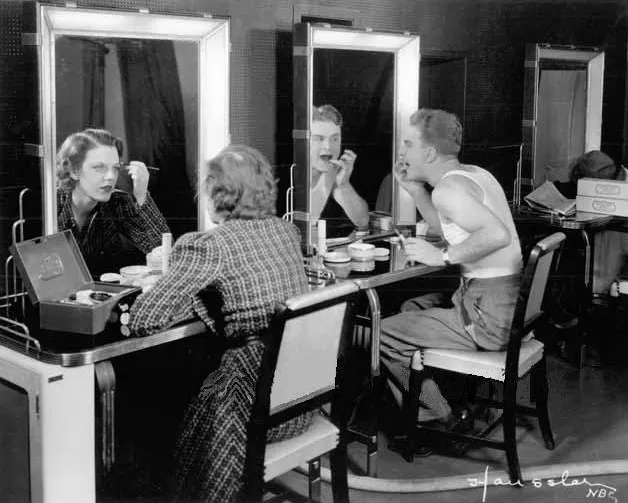
Photo: Marked as an NBC photo on front and back. Have been able to view a similar photo and this is the photographer's name-Haussler. Uploaded by We hope at en.wikipedia, Public domain, via Wikimedia Commons
There's a certain kind of actor Hollywood tends to overlook in the awards conversation but can't seem to stop calling. Emily Bergl is that actor. Over the course of roughly three decades in the business, she has quietly assembled one of the most impressive television résumés of her generation — not by landing a flagship role in a network drama, but by doing something arguably harder: making every single appearance count.
If you've been watching prestige TV at any point in the last twenty years, you've almost certainly seen her. You may not have immediately placed the name, but the face — and more importantly, the work — registered. That's not an accident. That's craft.
Starting From a Place of Strength
Bergl first broke through with The Rage: Carrie 2 in 1999, a film that earned its cult status slowly but surely over the years. But even as that horror sequel found its audience on home video and late-night cable, Bergl was already pivoting toward television with a clear-eyed intentionality that would define her entire career trajectory.
Her early TV work planted seeds in procedurals and dramas where she demonstrated a range that went well beyond the genre confines of her feature debut. She wasn't trying to escape the cult classic label — she was simply expanding beyond it, one carefully chosen role at a time.
The Prestige TV Era: Showing Up in All the Right Places
What makes Bergl's television career so fascinating to trace is how consistently she's landed in shows that matter. American Horror Story, Ryan Murphy's anthology juggernaut, gave her a platform that reached millions of viewers across multiple seasons. Murphy's universe has a reputation for rewarding actors who can inhabit extreme emotional terrain without tipping into parody — and Bergl delivered exactly that.
Then there's Succession, HBO's razor-sharp dissection of dynastic wealth and media power. Landing a role in that universe — even a supporting one — says something. The writers' room and casting team on that show were notoriously selective, and the ensemble they built was stacked with serious theatrical talent. Bergl fit right in.
Her work on Ozark, Netflix's slow-burn crime drama, added yet another dimension. That show demanded actors who could hold their own opposite Jason Bateman and Laura Linney, two performers who set an exceptionally high bar. Bergl met it.
What these three shows share — beyond their cultural cachet — is a demand for specificity. None of them have room for vague, generalized performances. Every character needs to feel like a real person with a real history, even if they only appear in a handful of episodes. That's precisely the kind of challenge Bergl seems to seek out.
The Strategy Behind the Choices
It would be easy to frame Bergl's career as a series of happy accidents — the right auditions at the right times. But spend any time paying attention to her body of work and a different picture emerges. There's a deliberateness to it.
She has consistently gravitated toward complex, morally layered characters. She doesn't seem particularly interested in playing decorative roles or straightforward archetypes. The parts she takes tend to have texture — women with contradictions, with hidden motivations, with something going on beneath the surface. That preference has kept her work interesting across a remarkably long stretch of time.
In an industry where actors are frequently encouraged to find their "type" and stick to it for marketability, Bergl has operated more like a chameleon. Drama, dark comedy, horror, prestige thriller — she's moved through genres without losing her footing in any of them.
What Longevity Actually Looks Like
Hollywood has a complicated relationship with longevity. The industry tends to celebrate it in retrospective tributes and lifetime achievement moments, but in the day-to-day grind of casting decisions, it often favors novelty over experience. Character actors — particularly women — face an especially narrow window of mainstream visibility before they're either elevated to leading-lady status or quietly sidelined.
Bergl has navigated that tension by refusing to be defined by it. She didn't burn bright and fade. She didn't pivot to reality television or retreat from the industry after a few lean years. She kept working, kept choosing interesting material, and kept delivering.
That consistency has built something more durable than a single breakout moment ever could: a reputation. Among casting directors, writers, and showrunners, that kind of reputation is currency. It's why, thirty-plus years into her career, she's still getting calls.
Why It Matters
There's a broader conversation worth having here about what success in Hollywood actually means — and who gets to define it. By conventional metrics, Bergl isn't a "star." She doesn't open movies. Her name doesn't guarantee a certain box office threshold. But by the metrics that actually measure craft and staying power, she's one of the more successful actors working in American television today.
For fans who've been following her work since Carrie 2, watching that evolution has been genuinely rewarding. And for anyone who discovers her through Succession or Ozark and goes digging through her back catalog, there's a whole career worth exploring — one that holds up at every stage.
That's the real legacy being built here. Not a single iconic moment, but an entire body of work that keeps revealing new layers the more closely you look at it.
And honestly? That might be the most impressive trick in show business.